Artificial intelligence and the transformation of information processing in businesses: generational adaptation and organizational size
A Global Analysis of Large Corporations, Medium-Sized Businesses, and Startups Facing Technological Transformation.
Maria Jose Peralta Siles · Edited by Asim Aslam
· 8 min read

Abstract
Artificial intelligence (AI) is transforming how businesses collect, process, analyze, interpret, and use information for decision-making. Its integration into organizational processes is changing productivity, knowledge management, internal communication, and strategic planning.
The transformation is uneven. Differences relate to organizational size, technological resources, investment capacity, and the generational characteristics of employees. This paper examines how AI has changed information processing worldwide, considers adoption and adaptation across age groups, and analyzes the challenges faced by large corporations, medium-sized businesses, and startups.
It seeks to understand whether age is associated with AI adoption, which groups report higher levels of use, and which organizational conditions support a successful technological transition.
Keywords
Artificial intelligence; information processing; generational adaptation; digital transformation; business management; organizational innovation; professional development.
1. Introduction
Digital transformation has evolved considerably over recent decades. The expansion of generative artificial intelligence represents one of the most significant recent developments in business management.
Traditionally, information processing relied on human activities such as data collection, document review, statistical analysis, report preparation, and interpretation. Today, AI tools can automate parts of these activities, identify patterns, generate content, summarize large volumes of information, and support decision-making.
This change is not merely technological; it also reshapes the professional competencies required in the labor market. Employees must develop new skills and learn to integrate AI into daily work. Adaptation may be influenced by age, professional experience, education, prior exposure to digital technologies, and organizational culture.
Implementation opportunities also differ between multinational corporations and early-stage startups. The transformation should therefore be examined through an integrated perspective that considers both generational differences and organizational structures.
2. Research Objectives
General objective: To analyze the impact of artificial intelligence on information processing in businesses worldwide, considering differences in adaptation by employee age group and organizational size.
Specific objectives:
- Identify changes introduced by AI in the collection, processing, analysis, and use of business information.
- Examine differences in technological adoption and adaptation among employees of different age groups.
- Analyze the advantages and challenges faced by large corporations, medium-sized businesses, and startups.
- Identify professional competencies that are increasingly relevant in an AI-driven business environment.
- Propose adaptation strategies that account for generational and organizational characteristics.
3. AI and Business Information Processing
AI enables computer systems to perform tasks that traditionally required human capabilities, including pattern recognition, language interpretation, information classification, content generation, and decision support.
Business applications include: (a) information processing through classification, extraction, organization, and summarization of documents and data; (b) business analytics to identify trends, patterns, and opportunities; (c) administrative management and repetitive-task automation; (d) organizational communication, including writing and translation support; and (e) decision support through analysis and scenario generation.
These tools change how work is distributed between people and technology. Employees increasingly supervise, interpret, validate, and apply AI-generated outputs. This creates efficiency opportunities while increasing the importance of human judgment and critical thinking.
4. Generational Adaptation to Artificial Intelligence
For analytical purposes, four reference age groups are proposed:
- Ages 18–29: familiarity with digital tools, experimentation, and technological learning.
- Ages 30–44: integration of AI into professional activities and productivity improvement.
- Ages 45–59: adaptation based on professional experience and skills development.
- Ages 60 and above: access to training, digital literacy, and adaptation to new technological environments.
This is a methodological classification; it does not imply that everyone in an age group behaves or learns in the same way.
Younger adults: exposure to digital platforms may support initial familiarity with AI, but does not guarantee appropriate professional use. Critical thinking, verification, and awareness of risks remain necessary.
Middle-aged adults: often have professional experience and knowledge of internal processes. These strengths can help them assess the usefulness and reliability of AI outputs, although some may need additional training.
Older adults: adoption may be affected by familiarity with platforms, access to training, and perceived usefulness. Accumulated experience and institutional knowledge are valuable resources.
Research must distinguish higher usage, ease of learning, and the ability to use AI productively and critically. These are not interchangeable measures. Differences in usage do not by themselves demonstrate differences in learning capacity; age should not be treated as an isolated determinant of technological competence.
5. Adaptation by Business Size
Large corporations: generally have greater financial resources, technological infrastructure, specialized departments, and investment capacity. They may apply AI to large-scale data analysis, administrative automation, business intelligence, forecasting, customer management, and strategic decision support. Challenges include system integration, security, data protection, and resistance to change.
Medium-sized businesses: occupy an intermediate position. They may implement AI tools but often have less financial and technical capacity than large corporations. Opportunities include administrative automation, virtual assistants, report generation, commercial analysis, inventory optimization, and marketing support. Their challenge is selecting tools that deliver real benefits and training employees.
Startups and emerging businesses: can adopt accessible tools early, without necessarily replacing established technological structures. Applications include market research, commercial proposals, content creation, customer analysis, administration, and sales strategies. Risks include technological dependence, limited technical knowledge, protection of confidential information, and insufficient supervision.
6. Comparison of Business Segments
Variable | Large corporations | Medium-sized businesses | Startups |
|---|---|---|---|
Investment capacity | High | Intermediate | Generally limited |
Infrastructure | Advanced | Variable | Basic or cloud-based |
Implementation | Integrated, specialized systems | Selective tools | Accessible tools |
Main benefit | Large-scale optimization | Operational efficiency | Cost reduction and speed |
Main challenge | Integration and change management | Resources and training | Knowledge and financing |
Main need | Governance and transformation | Training and strategic implementation | Digital literacy and tool selection |
7. Interaction Between Age and Organizational Size
Adaptation depends on the interaction between individual characteristics and organizational conditions. A 55-year-old employee at a multinational may have structured training, infrastructure, and specialist support. A 25-year-old employee at a startup may be more familiar with digital tools but have less access to formal training or resources.
The organizational environment, learning opportunities, leadership, and innovation culture therefore matter. The following matrix can structure further research:
Age group | Large corporations | Medium-sized businesses | Startups |
|---|---|---|---|
18–29 | Assess adoption and adaptation | Assess adoption and adaptation | Assess adoption and adaptation |
30–44 | Assess adoption and adaptation | Assess adoption and adaptation | Assess adoption and adaptation |
45–59 | Assess adoption and adaptation | Assess adoption and adaptation | Assess adoption and adaptation |
60+ | Assess adoption and adaptation | Assess adoption and adaptation | Assess adoption and adaptation |
This matrix is a research framework, not an established empirical finding.
8. Human Capital and Professional Competencies
Increasingly important competencies include AI literacy, critical thinking, data analysis and interpretation, adaptability and continuous learning, effective communication, supervision and validation of outputs, responsible information management, and problem-solving.
Training programs should teach not only how specific tools work, but also how to integrate them into work processes. Training should address different needs without creating barriers based solely on age.
Intergenerational learning can be valuable: experienced employees contribute institutional knowledge and professional judgment, while employees with greater technological familiarity can help introduce new tools.
9. Challenges and Risks
Key challenges include changes to tasks and job profiles; excessive dependence on automated systems; errors or inaccurate AI-generated information; privacy and security risks; unequal access to training; organizational resistance; and technological gaps between businesses of different sizes.
Adoption should be accompanied by human oversight, continuous training, data protection, and outcome evaluation. High-impact decisions require clear controls and accountability.
10. Proposed Research Methodology
This paper is designed as documentary research with a descriptive and analytical scope and an international perspective. It proposes using information from international organizations, academic studies, and research on digital transformation, AI, and the labor market.
Independent variables:
- Age: 18–29, 30–44, 45–59, and 60 or older.
- Organizational size: large corporations, medium-sized businesses, and startups or emerging businesses.
Dependent variables: level of AI adoption, frequency of use, access to training, perceived ease of adaptation, workplace applications, and perceived productivity benefits.
Suggested indicators: percentage of employees using AI; percentage of businesses that have adopted it; training hours; number of automated processes; changes in processing time; and perceived usefulness and trust.
Limitations: international datasets do not always allow age, business size, and productivity to be examined simultaneously. Verified statistics, previous research findings, and hypotheses requiring further testing must be distinguished. Surveys of employees and businesses could complement the documentary approach.
11. International Perspective and Relevance to Latin America
AI adoption differs across regions. Countries with stronger digital infrastructure, technological investment, and access to specialized professionals may be better positioned to adopt advanced systems.
In Latin America, adoption opportunities coexist with challenges involving connectivity, training, investment, and productivity differences. Large organizations may be better positioned to develop large-scale projects, while small and medium-sized businesses need accessible solutions and gradual implementation strategies.
In Bolivia, it is particularly relevant to study how businesses can use AI to improve administrative, commercial, and operational processes while accounting for differences in resources and technological readiness. Human capital development is essential if transformation is to deliver real improvements rather than simply involve purchasing tools.
12. Conclusions
Artificial intelligence is changing information processing and the competencies required in the workplace. Available evidence indicates differences in usage across generations and differences in resources among organizations of different sizes.
In several studies, younger people report higher levels of AI tool usage, while older generations may face greater adoption barriers. This does not mean they have less ability to learn or less professional potential. Professional experience, institutional knowledge, and the ability to interpret complex situations can be important strengths.
Large corporations generally have stronger resources and infrastructure; medium-sized businesses and startups may face financial and technical constraints. Nevertheless, smaller organizations can also benefit from accessible tools and appropriate implementation strategies.
Adaptation does not depend exclusively on age or business size. Organizational culture, training opportunities, leadership, and willingness to learn continuously also matter. Successful transformation requires integrating technology with employees’ knowledge, experience, and competencies.
13. Preliminary Bibliographical References
The following references provide a starting point and must be checked against the original publications before formal academic submission:
- OECD. (2025). AI Adoption by Small and Medium-Sized Enterprises. Organisation for Economic Co-operation and Development.
- OECD. (2025). Emerging Divides in the Transition to Artificial Intelligence. Organisation for Economic Co-operation and Development.
- OECD. (2026). OECD Digital Economy and Society Outlook 2026. Organisation for Economic Co-operation and Development.
- International Labour Organization. (2026). Research on artificial intelligence, employment transformation, and workforce skills.
- Stanford Institute for Human-Centered Artificial Intelligence. (2026). AI Index Report 2026.
The OBS Live Briefing
Get the latest business news in your inbox.
Spotted an error? Request a correction. Read our editorial standards.
Related
Analysis
AI adoption beyond the hype: a practical checklist for mid-sized enterprises
The companies getting value from AI are not the ones with the biggest budgets. They are the ones that picked the right first problem.
OBS Live Newsroom · · 1 min read
World Business
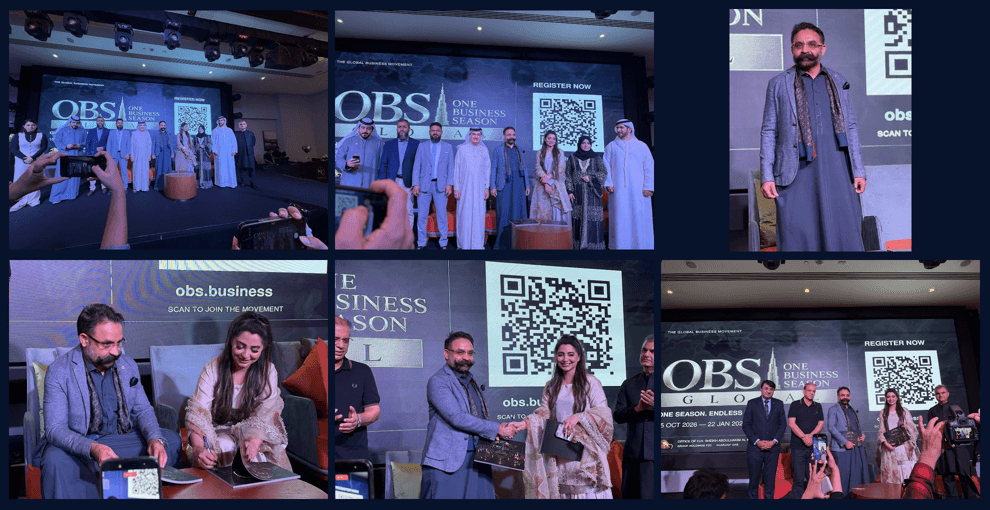
OBS Global Organised World Trade Expo and Trade Excellence Award in Dubai
The third flagship event of OBS Global brought international trade, business connections and commercial excellence to the forefront.
OBS Live Newsroom · · 2 min read

World Business
SpaceX Plans More Than $74 Billion for Two AI Supercomputing Campuses
SpaceX says it will invest over $74 billion in AI supercomputing campuses in Texas and Arizona, subject to local approvals.
OBS Live Research · · 1 min read

Markets
Microsoft Outage Disrupts Businesses Worldwide as Services Return
A widespread Microsoft outage left workers without email and key tools for hours; the company says services are being gradually restored
OBS Live Research · · 1 min read